
Vintage brown leather armchair with deep cushions, visible wrinkles, brass nailhead trim, and beautifully carved wooden legs.
Text to 3D
Describe what you imagine and let AI create a detailed, high-quality 3D model—no modeling skills or software required.
Text to 3D examples
Create characters, props, products, and more—from a simple description to a production-ready 3D model in seconds.
Vintage brown leather armchair with deep cushions, visible wrinkles, brass nailhead trim, and beautifully carved wooden legs.

Cyberpunk robotic dog built from black metal panels, exposed mechanical joints, and glowing neon-blue accents. Game-ready sci-fi companion.

A funny cartoon chef with a huge mustache, tall white hat, and round body, proudly holding an oversized frying pan.

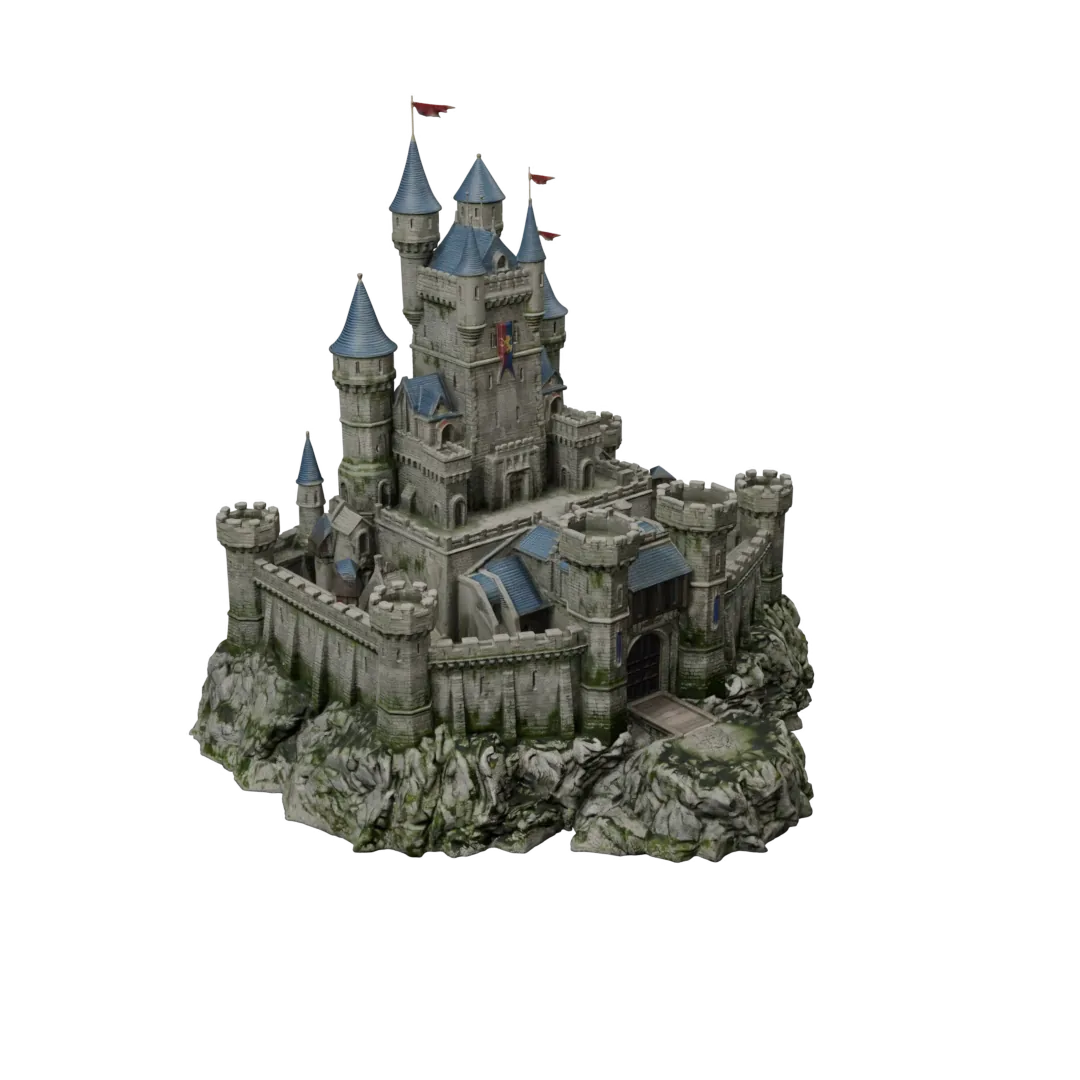
Ancient circular stone tower standing on a rocky base, covered in moss, ivy, and small purple flowers. Weathered fantasy environment asset.

Silver knight helmet with intricate engravings, battle scratches, sharp decorative edges, and mysterious glowing blue eyes inside.

Cute baby dinosaur wearing a bright yellow raincoat and matching boots, standing in a puddle after the rain, happy expression

magic potion bottle filled with swirling purple liquid, old glass, golden stopper, glowing particles floating around it, fantasy game item

Dark fantasy sword forged from black metal, with a cracked blade and glowing lava running through the surface. Highly detailed weapon design.
Three steps
Turn any idea into a ready-to-use 3D asset in three simple steps.

Write a prompt describing the object, character, or environment you want to create. Add details such as shape, style, materials, colors, and intended use.

Choose a visual style and quality level, then let AI generate the geometry and materials. Preview the result directly in the interactive 3D viewer.

Inspect your model from every angle, change or add surface details with AI Texturing, and export it in formats such as GLB, FBX, OBJ, or STL for your preferred 3D workflow.
Made for Physical Creation
Turn written ideas into original models for personal projects, commercial products, and professional 3D printing.

01
Create characters, creatures, tabletop miniatures, and display figures from detailed text prompts.

02
Generate original toys, articulated characters, collectible models, and accessories for physical production.

03
Create masks, fantasy props, ornaments, signs, sculptures, and decorative objects.

04
Turn early ideas into physical concept models for review, testing, education, or presentation.
Used by makers, miniature artists, product designers, model sellers, and print studios to turn ideas into physical creations faster.
“Crisp3D helps me turn character ideas into detailed models much faster. I can explore several variations before choosing the best one for resin printing.”
Ethan Blake
Resin Miniature Artist
“I can turn a sketch into a 3D model, split complex designs into parts, and prepare everything for slicing without switching between multiple tools.”
Lena Morris
3D Printing Hobbyist
“Crisp3D makes it much easier to turn early concepts into physical prototypes. I can test different shapes and ideas before committing time and material to a print.”
Maya Chen
Product Prototype Designer
“The segmentation tools make large figures much easier to print, paint, and assemble. Being able to add practical joints in the same workflow saves me a lot of time.”
Daniel Rivera
Collectible Model Creator
“Using different AI models and sending the result directly to my slicer makes custom projects much faster, especially during busy production periods.”
Noah Williams
3D Print Shop Owner
“I use Crisp3D to turn reference images into prop concepts, split large models to fit my printer, and prepare the parts for printing and assembly.”
Priya Shah
Cosplay Prop Maker
Keep creating
Move from first concept to a clean, textured, production-ready asset without leaving Crisp3D.
FAQ
Text to 3D is an AI-powered way to create 3D models from written descriptions. Instead of modeling manually, describe the miniature, figurine, collectible, prop, decoration, or prototype you want to print, and AI generates a 3D starting point based on your prompt.
Crisp3D supports common 3D formats including GLB, FBX, OBJ, 3MF and STL. Choose the format that works best with your preferred modeling, preparation, or slicing software.
No. You do not need professional modeling skills to get started. Write a clear description of what you want to print and include details such as shape, style, proportions, intended size, and whether it should be a single-piece or multi-part model.
Yes. Use 3D Segmentation to divide large or complex models into separate parts and add connection options for easier printing, painting, and assembly.
You can create miniatures, figurines, toys, collectibles, tabletop models, cosplay props, decorative objects, and physical prototypes. More specific prompts usually produce results that are closer to your idea.
Yes. You can generate a 3D model from a text prompt, inspect it, split complex designs into parts, optimize the mesh, and export it for printing. Always check scale, wall thickness, orientation, supports, and printer-specific settings before starting a print.
Yes. After generation, you can rotate the model, inspect it from different angles, and review its shape, proportions, surface details, and overall structure before preparing it for printing.
Generated models may still require final checks based on your printer, material, and intended size. Review wall thickness, scale, part connections, orientation, supports, and other print settings in your slicer before printing.
Simple pricing
Compare the plans and choose the production capacity that fits your 3D workflow.
Best for light personal use
US$19.9/mo
MOST POPULAR
Ideal for frequent users
US$39.9/mo
Built for professionals and heavy batch
US$119.9/mo
Privacy
Crisp3D gives you clear control over how your content is handled, based on your plan.
Your uploads are encrypted during transfer and while stored. Your account and personal information are protected from unauthorized access.
Content created on the free plan may be publicly accessible and licensed under Creative Commons Attribution 4.0 (CC BY 4.0), allowing others to use and adapt it with proper attribution. Content created on a paid plan remains private and is not made publicly available or licensed to other users.
We clearly communicate the privacy and licensing terms that apply before you create, so you can choose the option that works best for you.
Text to 3D
Describe what you imagine and let AI create a detailed, high-quality 3D model—no modeling skills or software required.
Text to 3D examples
Create characters, props, products, and more—from a simple description to a production-ready 3D model in seconds.
Vintage brown leather armchair with deep cushions, visible wrinkles, brass nailhead trim, and beautifully carved wooden legs.
Cyberpunk robotic dog built from black metal panels, exposed mechanical joints, and glowing neon-blue accents. Game-ready sci-fi companion.
A funny cartoon chef with a huge mustache, tall white hat, and round body, proudly holding an oversized frying pan.
Ancient circular stone tower standing on a rocky base, covered in moss, ivy, and small purple flowers. Weathered fantasy environment asset.
Silver knight helmet with intricate engravings, battle scratches, sharp decorative edges, and mysterious glowing blue eyes inside.
Cute baby dinosaur wearing a bright yellow raincoat and matching boots, standing in a puddle after the rain, happy expression
magic potion bottle filled with swirling purple liquid, old glass, golden stopper, glowing particles floating around it, fantasy game item
Dark fantasy sword forged from black metal, with a cracked blade and glowing lava running through the surface. Highly detailed weapon design.
Three steps
Turn any idea into a ready-to-use 3D asset in three simple steps.
Write a prompt describing the object, character, or environment you want to create. Add details such as shape, style, materials, colors, and intended use.
Choose a visual style and quality level, then let AI generate the geometry and materials. Preview the result directly in the interactive 3D viewer.
Inspect your model from every angle, change or add surface details with AI Texturing, and export it in formats such as GLB, FBX, OBJ, or STL for your preferred 3D workflow.
Made for Physical Creation
Turn written ideas into original models for personal projects, commercial products, and professional 3D printing.
01
Create characters, creatures, tabletop miniatures, and display figures from detailed text prompts.
02
Generate original toys, articulated characters, collectible models, and accessories for physical production.
03
Create masks, fantasy props, ornaments, signs, sculptures, and decorative objects.
04
Turn early ideas into physical concept models for review, testing, education, or presentation.
Used by makers, miniature artists, product designers, model sellers, and print studios to turn ideas into physical creations faster.
“Crisp3D helps me turn character ideas into detailed models much faster. I can explore several variations before choosing the best one for resin printing.”
Ethan Blake
Resin Miniature Artist
“I can turn a sketch into a 3D model, split complex designs into parts, and prepare everything for slicing without switching between multiple tools.”
Lena Morris
3D Printing Hobbyist
“Crisp3D makes it much easier to turn early concepts into physical prototypes. I can test different shapes and ideas before committing time and material to a print.”
Maya Chen
Product Prototype Designer
“The segmentation tools make large figures much easier to print, paint, and assemble. Being able to add practical joints in the same workflow saves me a lot of time.”
Daniel Rivera
Collectible Model Creator
“Using different AI models and sending the result directly to my slicer makes custom projects much faster, especially during busy production periods.”
Noah Williams
3D Print Shop Owner
“I use Crisp3D to turn reference images into prop concepts, split large models to fit my printer, and prepare the parts for printing and assembly.”
Priya Shah
Cosplay Prop Maker
Keep creating
Move from first concept to a clean, textured, production-ready asset without leaving Crisp3D.
FAQ
Text to 3D is an AI-powered way to create 3D models from written descriptions. Instead of modeling manually, describe the miniature, figurine, collectible, prop, decoration, or prototype you want to print, and AI generates a 3D starting point based on your prompt.
Crisp3D supports common 3D formats including GLB, FBX, OBJ, 3MF and STL. Choose the format that works best with your preferred modeling, preparation, or slicing software.
No. You do not need professional modeling skills to get started. Write a clear description of what you want to print and include details such as shape, style, proportions, intended size, and whether it should be a single-piece or multi-part model.
Yes. Use 3D Segmentation to divide large or complex models into separate parts and add connection options for easier printing, painting, and assembly.
You can create miniatures, figurines, toys, collectibles, tabletop models, cosplay props, decorative objects, and physical prototypes. More specific prompts usually produce results that are closer to your idea.
Yes. You can generate a 3D model from a text prompt, inspect it, split complex designs into parts, optimize the mesh, and export it for printing. Always check scale, wall thickness, orientation, supports, and printer-specific settings before starting a print.
Yes. After generation, you can rotate the model, inspect it from different angles, and review its shape, proportions, surface details, and overall structure before preparing it for printing.
Generated models may still require final checks based on your printer, material, and intended size. Review wall thickness, scale, part connections, orientation, supports, and other print settings in your slicer before printing.
Simple pricing
Compare the plans and choose the production capacity that fits your 3D workflow.
Best for light personal use
US$19.9/mo
MOST POPULAR
Ideal for frequent users
US$39.9/mo
Built for professionals and heavy batch
US$119.9/mo
Privacy
Crisp3D gives you clear control over how your content is handled, based on your plan.
Your uploads are encrypted during transfer and while stored. Your account and personal information are protected from unauthorized access.
Content created on the free plan may be publicly accessible and licensed under Creative Commons Attribution 4.0 (CC BY 4.0), allowing others to use and adapt it with proper attribution. Content created on a paid plan remains private and is not made publicly available or licensed to other users.
We clearly communicate the privacy and licensing terms that apply before you create, so you can choose the option that works best for you.


